
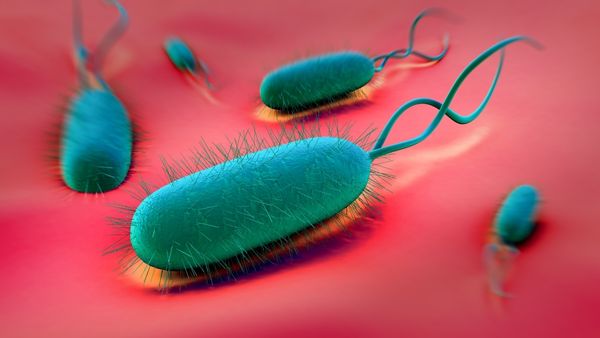
A food poisoning incident in a family dinner in Jixi city of Heilongjiang province, has caused deaths recently. Bongkrekic acid contamination is a leading cause for severe food poisoning and deaths and it is suspected to be responsible for this incident. Its heat resistant trait makes it hard to break down even if the food is cooked under 100℃ or steamed in a pressure cooker.
Helicobacter pylori (H. pylori ) is also a bacteria surrounding us that can survive in the worst environment and make half of the world’s population suffer. According to the Chinese consensus on eradication of Helicobacter pylori and prevention & control of gastric cancer published in the Chinese Journal of Digestion in 2019, H. pylori infection is the leading cause for stomach cancer in China. 15%- 20% of patients have developed peptic ulcer, 5% - 10% of patients have developed H. pylori-related indigestion, 1% have developed malignant tumours in the stomach.
Helicobacter pylori (Hp) often lives in the gastric mucosa. After infection, it mainly causes diseases such as chronic gastritis and peptic ulcer. It is closely related to diseases such as gastric cancer and gastric mucosa-associated lymphoid tissue (MALT) lymphoma. It is listed as the first category of biological carcinogen by the World Health Organization (WHO). This kind of bacteria is not friendly to humans. If this kind of bacteria exists in our stomach, it can easily cause gastritis, peptic ulcer, and even lymphoid hyperplasia and other diseases. If not treated in time, it can easily lead to the occurrence of gastric cancer, and gastric cancer ranks second among cancer deaths in China.
Around 50% of the world’s population are infected with H. pylori. The prevalence of H. pylori infection varies widely among countries and regions, and among different ethnic groups, depending on socioeconomic level, population density, public health conditions, and water supply. eason . The infection rate of H. pylori will also increase with age. The rate in developing countries is usually higher of about 50%-80% while it is lower in developed countries of about 25%-50%. The rate in China is around 50%.
The invasion of Helicobacter pylori will lead to a decline in gastric function. The reason why many people have gastric ulcers and chronic gastritis that affects their health is also related to the continuous invasion of this bacteria. Of course, the process of Helicobacter pylori affecting health is not without trace, and related symptoms will also appear. If you feel something strange in your body, you should detect it as soon as possible and take reasonable conditioning measures. Only by killing Helicobacter pylori in the stomach can the stomach return to a healthy state.
How do we get H. pylori?
- Food & Drink
You may get H. pylori from eating raw food. More and more people like eating sashimi as they want to have the freshest taste, and the original flavour of the food. Other than getting H. pylori, you may also get parasitic worms. The risk of catching H. pylori will increase if you are a frequent sashimi eater. - Public Goods
H. pylori can be transmitted through saliva. If we often eat out, we may come into contact with some public goods that are not being sterilised at high temperature. From that, we are prone to infect H. pylori if we are using utensils that were previously used by people infected with H. pylori. - Bad Personal Hygiene
Some people with bad personal hygiene will not wash their hands after going to the toilet. Their hands are likely to be contaminated with H. pylori as it exists in the mouth and stomach, and in stools.
Those unwashed hands will infect their owner with H. pylori, spread it and put other’s health in great danger.
Important signal of H. pylori!
People can be infected with H. pylori without any significant symptoms and the symptoms vary depending on the infected areas. 30% of the infection will develop into chronic gastritis while 10%-20% will develop into peptic ulcer and very few of the infection will develop into stomach cancer and mucosa-associated lymphoid tissue (MALT) lymphoma.
- Loss of appetite
You will have a bad appetite after being infected with H. pylori. It is because the infection will damage the stomach function and slow down the digestion process. The body will ring the alarm by having a bad appetite if the body cannot obtain enough nutrients from food. Therefore, it is recommended to conduct some tests if you have noticed that you are losing your appetite and are having trouble having a stable meal timing. - Stomach Ache
One of the symptoms of H. pylori infection is having unexplained, painful stomach ache. The stomach is inflamed when the H. pylori has stayed in the stomach for a period of time. The inflamed gastric mucosa is further irritated by the gastric acid and causes persistent stomach ache.Therefore, people who often suffer from stomach pain should check to determine whether Helicobacter pylori has invaded. Bacterial infection can be controlled through reasonable conditioning to prevent a significant decline in gastric function.
- Bloating
Frequent unexplained bloating and upper abdomen discomfort can be because of H. pylori infection. Foods accumulate in the stomach as the digestion is not going well after H. pylori infection. This will create a big amount of gas, making it easy to feel bloated.Therefore, it is recommended to stay alert if you have frequent unexplained bloating and upper abdomen discomfort after meals.
- Nausea and Vomiting
When infected with H. pylori, many people experience vomiting. Your body can only be functioning well when the stomach is functioning normally to digest food and provide nutrients. People with H. pylori infection may throw up after eating. This only appears when the digestive function is damaged.When the stomach is damaged, the patient will puke easily under irritation in the stomach. Keep an eye on bacterial infection when there is any unexplained vomiting. Use medication timely and keep a healthy lifestyle to improve the condition.
- Heart Burn
If you have obvious symptoms such as acid reflux and heartburn, you also need to be alert to the invasion of Helicobacter pylori. During the process of parasitizing the human stomach, this bacteria affects gastric function. The secretion of gastric acid is large, which may cause acid reflux and heartburn, and even affect the esophageal mucosa. This kind of special performance often occurs. If the cause is not sure, it can be known through examination. It is important to treat the bacterial infection in time.
How to prevent Helicobacter pylori in daily life?
Helicobacter pylori is contagious and can be transmitted through hands, unclean food, unclean tableware, feces, etc. Therefore, good hygiene habits should be developed in daily diet to avoid infection and contagion.
- Wash your hands before eating and after going to the toilet: eat cooked food, drink boiled water, wash and peel the fruits and vegetables before eating them raw.
- Maintain Good Oral Hygiene: H. pylori can replicate on tartar that is hard to clean and may cause bad breath. It is recommended to keep good oral hygiene by brushing and rinsing your mouth after each meal, changing your toothbrush and sanitising your cups and utensils regularly.
- Regular Body Check: Living with family members who are infected with H. pylori are at high risk of getting it too. Having a regular body check allows early prevention of the infection and conducts timely treatment.
- Infected persons need active treatment:Helicobacter pylori infection often occurs in families, so in order to effectively eradicate Helicobacter pylori and prevent secondary infections, family members infected with Helicobacter pylori should be actively treated to avoid infecting other people.
*Photos are extracted from the Internet, please contact us if copyright infringement has occurred. The above information is for reference only. Seek medical assistance immediately if you feel unwell.